
Back to Knowledge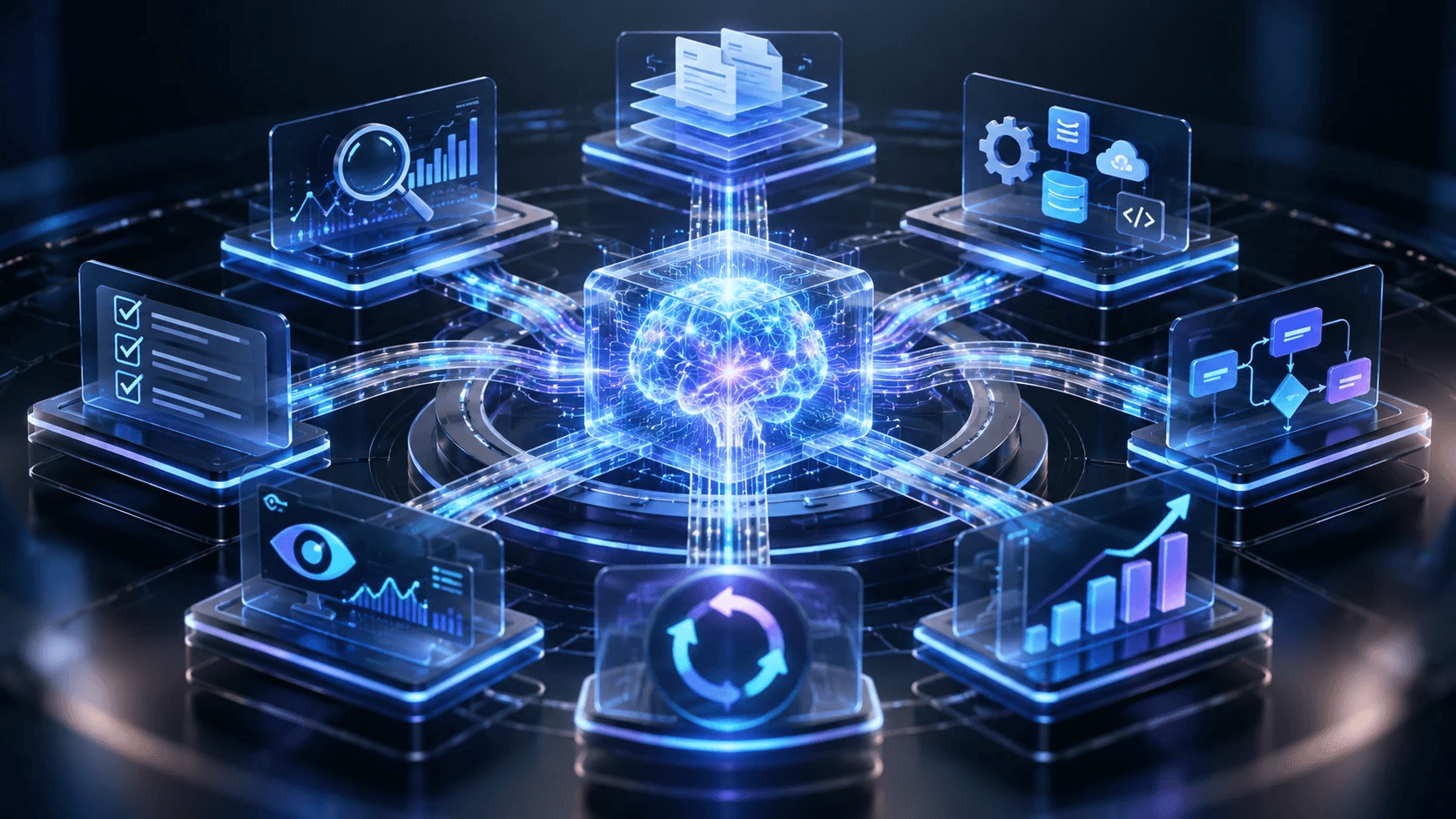
AI
Sep 22, 20265 min read
From Context Engineering to Harness Engineering
The hardest AI problems are no longer about writing the perfect prompt. After context engineering comes harness engineering — treating the model as one component inside a runtime built for evaluation, observability, orchestration, and continuous adaptation. Reliability is a property of the system, not the model.
The hardest AI problems are no longer about writing the perfect prompt. They are about building the environment in which an AI system can consistently do the right thing, recover when it fails, and improve without being rebuilt from scratch.
We spent the first wave of generative AI learning how to talk to models. Then we learned to engineer context: retrieval, memory, tool definitions, examples, instructions, schemas, and carefully constructed inputs. That was an important shift, but it may be only the middle of the story. The next frontier is harness engineering, where the model becomes one component inside a larger runtime designed around reliability, evaluation, orchestration, and adaptation.
Think about what happens when an AI agent moves from a demo to a production workflow. A prompt can tell it to research a customer, inspect a database, draft a recommendation, call an API, and update a system. But what happens when the retrieved context is wrong? What happens when an API times out halfway through the task? What happens when the model confidently chooses the wrong tool? What happens when yesterday's workflow worked beautifully and today's data distribution quietly changed? A prompt cannot answer those questions by itself.
This is where the psychology of AI engineering gets interesting. Humans naturally want to believe that intelligence lives inside the thing making the decision. With AI, that instinct can become expensive. We look at a model producing an impressive answer and assume the intelligence is contained in the model. In production, much of the practical intelligence may actually live around it: the checks, feedback loops, permissions, memory, routing, evaluation, fallbacks, and constraints that shape what the model is allowed to do.
Consider an AI support agent. A customer asks for a refund. The model understands the request perfectly, retrieves the account correctly, and generates a polite response. But the refund API fails. A context-engineered system might improve the prompt with more instructions about refunds. A harness-engineered system asks a different question: Did the tool execute? Did the transaction commit? If it failed, should the agent retry, escalate, or compensate? What evidence should be recorded? How do we know whether the final answer accurately reflects the state of the underlying system?
That distinction is enormous.
Reliability is not the same thing as intelligence.
A reliable AI system needs an evaluation system that continuously measures what matters. Not just whether the generated text sounds good, but whether the right action happened, whether the correct source was used, whether policy constraints were respected, whether the tool call was valid, whether the output remained consistent with the available evidence, and whether the system recovered appropriately after failure. Evaluation stops being something you perform at the end of development and becomes part of the runtime itself.
This changes the engineer's relationship with failure. In traditional software, a failing test is usually an obvious event. In AI systems, failure can be probabilistic, contextual, and strangely persuasive. The dangerous output is not always the obviously broken one. It can be the beautifully written answer that contains one unsupported assumption, the tool call that succeeds against the wrong record, or the agent that completes every step except the one that actually mattered.
That is why advanced AI systems increasingly need observability around decisions, not merely logs around requests. You want to know what context entered the system, which tools were considered, what actions were taken, what validations passed, where uncertainty appeared, and what happened after the model's response. You are effectively building a flight recorder for probabilistic software.
Runtime orchestration becomes the next layer. Instead of asking one model to do everything, the harness can decide which model should handle which task, when retrieval is necessary, when a deterministic function should replace generation, when human approval is required, and when execution should stop. A lightweight model might classify the request. A stronger model might reason through a complex case. A deterministic service might calculate the financial result. A policy engine might make the final authorization decision. The AI becomes part of a system rather than pretending to be the system.
There is a deeper psychological shift here too. Engineers often associate sophistication with autonomy. The more independently an agent operates, the more advanced it feels. But autonomy without instrumentation can simply mean failure happening faster and at greater scale. Mature AI architecture may therefore look less like an unconstrained autonomous agent and more like a carefully designed operating environment where autonomy expands only when evidence supports it.
This is also why continuous adaptation matters. The moment an AI system enters the real world, the world starts changing around it. Users discover new behaviors. APIs evolve. Documents become stale. Edge cases accumulate. Models get updated. Business rules change. New failure modes emerge. A static prompt and a static test suite slowly become historical artifacts.
The future-facing system is one that learns from its own operation without blindly learning from every outcome. Successful trajectories can become evaluation cases. Repeated failures can trigger new safeguards. Retrieval strategies can be compared. Tool selection can be measured. Routing policies can be adjusted. Human corrections can become structured feedback. The harness becomes a feedback mechanism between the system's behavior and its next version.
Imagine an AI coding agent that initially succeeds on 82 percent of your internal benchmark tasks. Instead of simply switching to a larger model, the team studies the remaining failures. They discover that many failures come from incomplete repository context, a smaller group from incorrect tool selection, and another group from tests that do not adequately capture intended behavior. The next improvement might therefore involve better context construction, stronger tool routing, and better evaluations rather than more parameters.
That is the fundamental move from context engineering to harness engineering. Context asks, “What does the model need to know?” Harness engineering asks the larger question: “What environment does the model need in order to behave reliably?”
The difference sounds subtle, but it changes the architecture of the entire AI stack. Prompts become one control surface. Retrieval becomes another. Evaluation becomes infrastructure. Observability becomes essential. Runtime orchestration becomes an architectural layer. Human intervention becomes an intentional mechanism rather than an embarrassing fallback. Continuous adaptation becomes part of the product lifecycle.
The companies that understand this shift will stop treating AI reliability as a property of a model. They will treat it as a property of a system.
Intelligence gets you an impressive demo, but the harness determines whether you can trust it in the real world.
And that may be the more important lesson of the next phase of AI engineering. If you are building AI systems today, I would love to hear where your biggest reliability problems actually live: in the model, the context, the tools, the evaluation layer, or the runtime around them. Share your experience. The interesting engineering problems are increasingly happening between the model and the world.